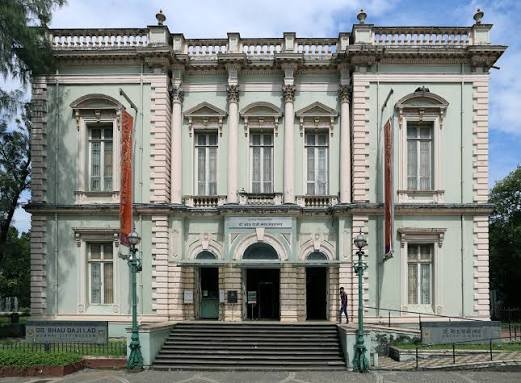
A damaged 9th-century stone elephant, the very one that gave Elephanta Island its name, sits quietly outside a soothing pista-green colonial building inside Mumbai’s Byculla Zoo campus — the Dr. Bhau Daji Lad Museum, Mumbai’s oldest museum and third oldest in India. Originally established in 1855 as a treasure house of decorative and industrial arts, and later reopened as the restored Victoria and Albert Museum, it now houses over 6,000 cultural relics documenting the city’s transformation from a trading port into a modern metropolis. If a visit is on your Mumbai itinerary, here’s a complete guide to the Bhau Daji Lad Museum’s timings, ticket price, entry fee, and location.
Quick Facts: Bhau Daji Lad Museum
| Detail | Information |
| Also Known As | Victoria and Albert Museum (former name) |
| Established | 1855, present building from 1872 |
| Renamed | 1975, in honour of Dr. Bhau Daji Lad |
| Reopened After Restoration | 2007/2008, by INTACH |
| Managed By | Municipal Corporation of Greater Mumbai (MCGM) |
| Location | Veermata Jijabai Bhosale Udyan (Rani Baug/Byculla Zoo), 91/A, Dr Babasaheb Ambedkar Road, Byculla East, Mumbai – 400027 |
| Opening Hours | 10:00 AM to 6:00 PM |
| Weekly Off | Wednesday (schedule occasionally adjusted for special dates) |
| Last Ticket Sold | 5:00 PM |
| Entry Fee (Indian Adult) | ₹10–₹20 |
| Entry Fee (Foreign Visitor) | ₹100 |
| Free Entry | Specially-abled visitors, MCGM school kids and employees, NGOs, Press |
| Total Artefacts | 6,000+ |
| Distance from Chhatrapati Shivaji Terminus | Approx. 4.5 km |
| Recommended Visit Duration | 1–1.5 hours |
Mumbai’s Oldest Museum, Restored to Its Original Grandeur
The museum’s history stretches back to 1855, when it was first established as the Central Museum of Natural History, Economy, Geology, Industry and Arts. It opened to the public in 1872 under the name Victoria and Albert Museum, before being renamed in 1975 to honour Dr. Bhau Daji Lad, a scholar and philanthropist whose efforts were central to the museum’s formation.
What makes today’s visit particularly special is the extensive restoration carried out by the Indian National Trust for Art and Cultural Heritage (INTACH), which brought the French Renaissance-style building back to something close to its original condition before it reopened in 2007–2008. Many visitors describe the building itself, with its restored Minton floor tiles, painted columns, chandeliers, and ornate wrought-iron staircase banisters, as being nearly as striking as the exhibits inside.
What You’ll See Inside
The museum’s collection is organised across several thematic galleries, tracing Mumbai’s evolution from a small trading settlement into a major metropolis:
- Origins of Mumbai – Documents the city’s early development and transformation
- Industrial Arts – Showcases craftsmanship and decorative arts of the period
- Century Paintings – A collection reflecting the visual culture of the era
- Founder’s Gallery – Dedicated to Dr. Bhau Daji Lad’s own legacy and contribution
- Kamalnayan Bajaj Mumbai Gallery – Focused specifically on the city’s history
- Kamalnayan Special Exhibitions Gallery – Hosts rotating contemporary exhibitions
Beyond these permanent divisions, the museum holds over 6,000 relics including sculptures, porcelain, ivory work, coins, maps, lithographs, photographs, and clay models and dioramas depicting everyday life in Bombay from the late 18th to early 20th century. Outside the building, visitors can also see the weathered stone elephant statue that gave Elephanta Island its name, along with British-era marble statuary.
Bhau Daji Lad Museum Timings
The museum keeps a consistent daily schedule with one fixed weekly closure:
- Open: Thursday to Tuesday, 10:00 AM to 6:00 PM
- Closed: Every Wednesday, plus public holidays
- Last ticket sold: 5:00 PM
Because the museum is fully air-conditioned, it remains a comfortable visit even during Mumbai’s hotter and more humid months, unlike attractions with significant outdoor exposure. Note that the museum occasionally adjusts its schedule around specific dates (for example, swapping a Wednesday opening with a different day’s closure), so it’s worth checking the official announcements if your visit falls near a public holiday.
Entry Fee and Ticket Price
Pricing remains genuinely affordable, with several free-entry categories:
- Indian nationals: ₹10–₹20 per person
- Foreign nationals: ₹100 per person
- Senior citizens: Around ₹10
- Free entry: Specially-abled visitors, MCGM school children and employees, registered NGOs, and Press
Given how modestly priced entry is relative to the scale and quality of restoration, it’s considered excellent value even by visitors who aren’t typically museum enthusiasts.
Location and How to Reach
The museum sits within the Byculla Zoo (Rani Baug) campus, making it one of the more centrally located heritage museums in Mumbai.
- Address: Veermata Jijabai Bhosale Udyan, 91/A, Dr Babasaheb Ambedkar Road, Byculla East, Mumbai, Maharashtra 400027
- By train: Just across the road from Byculla railway station on the Central Line, making it one of the easiest museums in Mumbai to reach by local train
- By road: Well served by BEST buses, taxis, and auto-rickshaws from across the city
- From Chhatrapati Shivaji Terminus: Approximately 4.5 km
Its location directly opposite Byculla station makes this among the most straightforward museum visits to plan in Mumbai, especially if you’re already navigating the city by local train.
Tips for a Smoother Visit
- Take the local train to Byculla station, since the museum is just across the road
- Arrive before 5:00 PM, as that’s when the last ticket is sold
- Avoid Wednesdays, the museum’s fixed weekly closure day
- Check the official website for occasional schedule changes around public holidays
- Combine your visit with Byculla Zoo, since both share the same campus
Frequently Asked Questions
Q1. Is the museum worth visiting even if I’m not particularly interested in Mumbai’s colonial history?
Yes, many visitors are drawn primarily to the restored Victorian architecture itself, describing the building’s tiles, chandeliers, and staircase as a genuine visual highlight independent of the historical exhibits. It works well for photography enthusiasts as much as history buffs.
Q2. Can I visit the museum and Byculla Zoo together on the same trip?
Yes, since the museum sits within the same Veermata Jijabai Bhosale Udyan campus as the zoo, many visitors combine both in a single outing. Note that zoo and museum entries are typically ticketed separately.
Q3. Why does the museum occasionally change its Wednesday closure to a different day?
The museum sometimes adjusts its schedule around specific public holidays or special dates, opening on what would normally be its closed Wednesday and closing on an alternate day instead. It’s worth checking the official website for any such swaps before planning a visit near a holiday.
Q4. Is the museum air-conditioned, making it comfortable to visit during Mumbai’s humid months?
Yes, the museum is fully air-conditioned throughout, making it a comfortable option even during Mumbai’s hotter and more humid periods. This is a genuine advantage over more outdoor-heavy attractions in the city.