Ten acres of open ground in Chanakyapuri hold nearly 80 full-size locomotives, carriages, and royal saloons — not models, not miniatures, but actual engines you can walk right up to and touch. The National Rail Museum, inaugurated on 1st February 1977, traces over 160 years of Indian Railways history, from steam-era engines to royal coaches once used by Indian princes and British officials. If a visit is on your Delhi itinerary, here’s a complete guide to the National Rail Museum’s timings, ticket price, entry fee, and location.
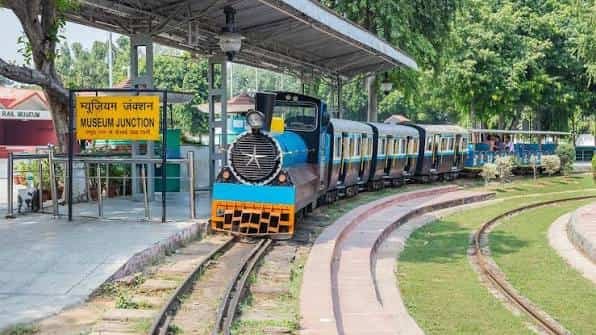
Quick Facts: National Rail Museum
| Detail | Information |
| Full Name | National Rail Museum |
| Foundation Laid | 7 October 1971, by President V. V. Giri |
| Inaugurated | 1 February 1977, by Minister of Railways Kamlapati Tripathi |
| Concept By | Michael Graham Satow (1970) |
| Location | Near Bhutan Embassy, Shantipath, Chanakyapuri, New Delhi – 110021 |
| Museum Area | 10–11 acres |
| Opening Hours | 10:00 AM to 5:00 PM |
| Last Entry | 4:30 PM |
| Weekly Off | Monday |
| Entry Fee, Weekday (Adult) | ₹50 |
| Entry Fee, Weekday (Child, 3–12 years) | ₹10 |
| Entry Fee, Weekend/Holiday (Adult) | ₹100 |
| Number of Outdoor Displays | Approx. 80 life-size exhibits |
| Annual Footfall | 5+ lakh visitors |
| Nearest Metro Station | Dhaula Kuan (approx. 2 km), Airport Express or Pink Line |
| Recommended Visit Duration | 2–3 hours |
A Museum Built to Preserve 160 Years of Railway History
The idea for a dedicated rail museum came from Michael Graham Satow in 1970, and it took shape when then-President V. V. Giri laid the foundation stone at Chanakyapuri in 1971. Construction took roughly six years, with the museum finally opening to the public in February 1977. What makes the collection genuinely significant is its scope — it doesn’t just document Indian Railways’ technical evolution, but also preserves rare pieces connected to Indian royal families and the British colonial administration.
Since opening, the museum has consistently ranked among Delhi’s most visited heritage attractions, drawing over 5 lakh visitors annually, a mix of railway enthusiasts, families, students, and international tourists exploring Delhi’s Chanakyapuri diplomatic enclave.
What You’ll See: Outdoor Yard and Indoor Galleries
The museum is split between a large outdoor display yard and indoor exhibition galleries, giving visitors both scale and technical depth.
Outdoor exhibits include:
- Nearly 80 life-size locomotives, carriages, and special coaches across different gauges
- Vintage steam engines from various eras of Indian Railways
- Royal saloons once used by Indian princes and British officials
- Diesel and electric locomotives representing later stages of railway development
Indoor gallery highlights include:
- A 1:8 scale model train display
- Coach, diesel, and steam simulators
- Various signalling instruments used across different periods
- Indian Railway uniforms through the decades
- Telecommunications systems historically used by Indian Railways
- Antique railway furniture and builder plates
Because the outdoor yard alone can take considerable time to explore properly, most visitors find that budgeting at least two to three hours gives them enough room to see both sections without rushing.
National Rail Museum Timings
The museum keeps a consistent six-day schedule:
- Open: Tuesday to Sunday, 10:00 AM to 5:00 PM
- Last entry: 4:30 PM
- Closed: Every Monday
- Best time to visit: January to April, when Delhi’s weather is more comfortable for the largely outdoor layout
Since a significant portion of the museum is open-air, checking Delhi’s weather forecast before visiting, especially during summer or monsoon months, is worth doing.
Entry Fee and Ticket Price
Pricing differs between weekdays and weekends/holidays:
- Weekday adult entry: ₹50
- Weekday child entry (3–12 years): ₹10
- Weekend/holiday adult entry: ₹100
- Payment: Tickets can typically be purchased directly at the counter on arrival; advance online booking generally isn’t mandatory
If budget is a consideration, visiting on a weekday rather than a weekend cuts the adult entry cost in half, while also likely meaning smaller crowds around the more popular exhibits.
Location and How to Reach
The museum’s Chanakyapuri address places it in one of Delhi’s quieter, more spacious diplomatic areas, distinct from the busier central tourist zones.
- Address: Near Bhutan Embassy, Shantipath, Chanakyapuri, New Delhi 110021
- By metro: Dhaula Kuan station, roughly 2 km away, connected via the Airport Express Line or Pink Line, followed by a short auto or cab ride
- By road: Well served by autos, cabs, and app-based ride services; Chanakyapuri’s wider roads make driving here comparatively easy
- Nearby attractions: Dilli Haat and Siri Fort Sports Complex are commonly combined with a Rail Museum visit
Because Chanakyapuri sits apart from Delhi’s more congested central areas, the drive here tends to be smoother than reaching many other central Delhi attractions.
Tips for a Smoother Visit
- Arrive by mid-morning to have enough time before the 4:30 PM last-entry cutoff
- Visit on a weekday if you want the lower ₹50 adult ticket price and lighter crowds
- Wear comfortable footwear, since the outdoor yard involves considerable walking across a large open campus
- Carry water and sun protection if visiting during warmer months, given the largely open-air layout
- Combine your trip with Dilli Haat, since both are reasonably close and commonly paired together
Frequently Asked Questions
Q1. Do I need to book tickets online in advance, or can I just walk in and pay?
Walk-in ticket purchases at the counter are generally sufficient, and online booking isn’t strictly necessary for a standard visit. It’s still worth checking current booking options if you’re visiting during a peak weekend or holiday period.
Q2. Why is the weekend ticket price double the weekday price?
The museum charges a higher rate on weekends and holidays, reflecting the typically higher visitor footfall during these periods. Visiting on a weekday is the more budget-friendly option if your schedule allows it.
Q3. Is the museum mostly outdoors, or are there indoor sections too?
It’s a mix of both — a large open-air yard houses the full-size locomotives and carriages, while separate indoor galleries display simulators, uniforms, and smaller historical artefacts. Plan for time in both sections during your visit.
Q4. Is this museum suitable for young children, or is it more for serious railway enthusiasts?
It works well for both. Children generally enjoy the scale of the full-size engines and any toy train rides available, while railway enthusiasts appreciate the depth of the historical exhibits and technical galleries.