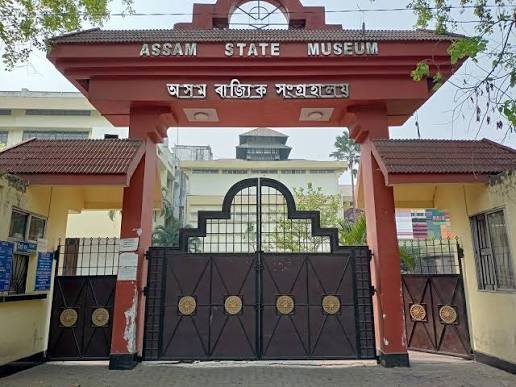
A stone inscription carved sometime in the 5th century sits inside a museum overlooking Guwahati’s picturesque Dighalipukhuri tank, alongside handwritten Assamese manuscripts and artefacts recovered from as recently as World War II. The Assam State Museum, established in 1940 by the Kamarupa Anusandhan Samiti under the leadership of Kanaklal Baruah, is one of Northeast India’s most significant repositories of regional history, art, and culture. If a visit is on your Guwahati itinerary, here’s a complete guide to the Assam State Museum’s timings, ticket price, entry fee, and location.
Quick Facts: Assam State Museum
| Detail | Information |
| Also Known As | Assam Rajyik State Museum |
| Established | 1940, by Kamarupa Anusandhan Samiti |
| Founding President | Kanaklal Baruah |
| Taken Over by State | 1953, after Baruah’s death |
| Location | GNB Road, Near Dighalipukhuri, Ambari, Guwahati, Assam – 781001 |
| Opening Hours | 10:00 AM to 5:00 PM |
| Weekly Off | Monday, plus 2nd and 4th Saturdays and government holidays |
| Entry Fee (Indian Adult) | ₹5–₹20 |
| Entry Fee (Foreign Visitor) | ₹50–₹300 |
| Collection Period | 5th century to World War II era |
| Number of Sections | 7+ (Epigraphy, Sculptures, Natural History, Crafts, Anthropology, Arms, Manuscripts) |
| Distance from Guwahati Railway Station | Approx. 1 km |
| Distance from Guwahati Airport | Approx. 22.8 km |
| Recommended Visit Duration | 1–1.5 hours |
From a Research Society’s Vision to Assam’s Premier Museum
The Assam State Museum’s origins trace back to the Kamarupa Anusandhan Samiti, the Assam Research Society, founded in 1912 with a mission to research and safeguard the region’s cultural heritage. In 1940, this society established what was then known as the Assam Provincial Museum, initially housed within Guwahati’s Cotton College, under the presidency of noted historian Kanaklal Baruah.
Following Baruah’s death, the state government took over administration of the museum in 1953. By 1959, the collection had outgrown its original location and moved to its present, more prominent site at Dighalipukhuri, where it was rechristened the Assam State Museum — a name that better reflected its expanded role as the region’s central institution for cultural preservation.
What You’ll See Inside: Sections Spanning Centuries
The museum’s collection is organised into distinct thematic sections, each documenting a different facet of Assam and Northeast India’s history:
- Epigraphy section – Stone, terracotta, and copper plate inscriptions dating from the 5th to 12th centuries
- Sculptures section – Historical sculptures and metallic artworks
- Manuscript section – Ancient manuscripts in Assamese, along with texts from Myanmar and Tai traditions
- Arms and ammunition section – Historical weaponry, including artefacts connected to World War II
- Numismatics section – Coin collections spanning various periods
- Natural History section – Specimens documenting the region’s flora and fauna
- Anthropology and Folk Art section – Reconstructed tribal huts, traditional costumes, and folk art
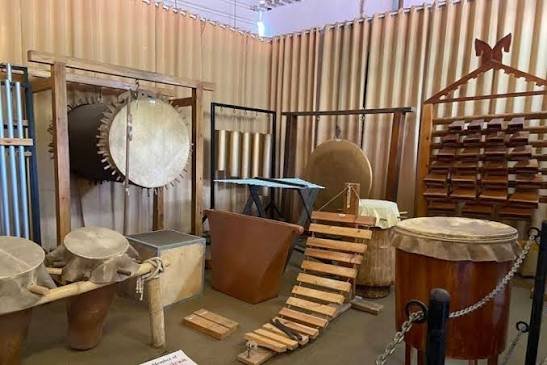
- Crafts section – Handicrafts and handmade objects representative of Northeast India, including weaving and traditional musical instruments
Beyond these core galleries, the museum also houses a small cottage industries museum under the administration of Assam’s Industrial Department, along with a research library established in 1985, containing periodicals, journals, and books covering art, culture, mythology, and biography, including Asiatic Society journal collections. Notably, the museum also holds a collection of Mahatma Gandhi’s photographs and correspondence.
Assam State Museum Timings
The museum follows a somewhat distinctive weekly schedule compared to most Indian museums:
- Open: Tuesday to Sunday, 10:00 AM to 5:00 PM
- Closed: Every Monday, plus the 2nd and 4th Saturdays of each month, and government holidays
- Best time to visit: October to March, or January through June per some listings, when Guwahati’s weather is more comfortable
The 2nd and 4th Saturday closures are worth noting specifically, since this pattern differs from most museums that only observe a single fixed weekly closure day.
Entry Fee and Ticket Price
Pricing has been reported with some variation across sources, likely reflecting updates over the years:
- Indian adults: Reported between ₹5 and ₹20
- Foreign visitors: Reported between ₹50 and ₹300
- Students and senior citizens: Discounted rates available
- Photography/videography: Separate charges apply, and prior permission is required
Given the range in reported pricing, it’s worth confirming the exact current rate at the counter when you arrive, particularly for photography permissions.
Location and How to Reach
The museum sits centrally in Guwahati, overlooking the scenic Dighalipukhuri tank.
- Address: GNB Road, Near Dighalipukhuri, Ambari, Guwahati, Assam 781001, opposite Guwahati High Court
- From Guwahati Railway Station: Approximately 1 km, roughly a 10-minute walk
- From Guwahati Airport: Approximately 22.8 km
- By road: Well connected by local buses and auto-rickshaws
- Nearby attractions: Kamakhya Temple, Umananda Temple, and Guwahati Planetarium are all within reasonable distance
Given its central location near the railway station, the museum is easy to fit into a Guwahati sightseeing day without requiring extensive travel time.
Tips for a Smoother Visit
- Check the calendar for 2nd and 4th Saturday closures in addition to the regular Monday closure
- Confirm photography permission and charges in advance if you plan to take pictures
- Visit between October and March for the most comfortable weather
- Combine your trip with nearby Dighalipukhuri tank and Guwahati High Court, both close by
- Set aside about 1–1.5 hours to properly explore the museum’s multiple sections
Frequently Asked Questions
Q1. Why does the museum close on the 2nd and 4th Saturdays specifically, in addition to Mondays?
This is a specific administrative schedule set for the museum, differing from the single-day weekly closure common at most other Indian museums. It’s worth checking a calendar before planning a Saturday visit to confirm which Saturday falls on the closure schedule.
Q2. Is photography allowed inside the museum, and does it require special permission?
Photography and videography are permitted but require separate charges and prior permission from museum authorities. It’s best to inquire about this at the entrance before attempting to photograph any exhibits.
Q3. Why do reported entry fees vary so widely across different sources?
Reported adult entry fees range from ₹5 to ₹20, and foreign visitor fees from ₹50 to ₹300, likely reflecting pricing updates over different years. It’s best to confirm the exact current rate directly at the museum counter.
Q4. Can I combine a visit to this museum with other Guwahati attractions in the same day?
Yes, its central location near Dighalipukhuri makes it easy to pair with Kamakhya Temple, Umananda Temple, or the Guwahati Planetarium. Many visitors comfortably combine two or more of these attractions in a single day given their relative proximity.