Seven full-scale replicas of tribal huts, built by artisans from the Santal, Juang, Gadaba, Saora, and Kondh communities, stand alongside their traditional tools and household objects inside a museum UNESCO recognised in 2010 as the best among 21 tribal museums in India. The Odisha State Tribal Museum, popularly known as the Museum of Man and formerly called the Museum of Tribal Arts & Artifacts, was established in 1953 to document and preserve the culture of over 60 tribal communities living across Odisha. If a visit is on your Bhubaneswar itinerary, here’s a complete guide to the Odisha State Tribal Museum’s timings, ticket price, entry fee, and location.
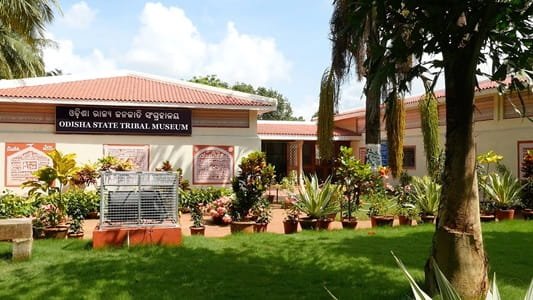
Quick Facts: Odisha State Tribal Museum at a Glance
| Detail | Information |
| Also Known As | Museum of Man, Museum of Tribal Arts & Artifacts |
| Established | 1953 |
| Managed By | Scheduled Castes & Scheduled Tribes Research and Training Institute (SCSTRTI) |
| Recognition | Ranked best among 21 tribal museums in India by UNESCO (2010) |
| Location | Unit-VIII, CRP-DAV Road, CRPF Colony, Nayapalli, Bhubaneswar, Odisha – 751003 |
| Number of Halls | 5, fully air-conditioned |
| Opening Hours | 10:00 AM to 5:00/5:30 PM |
| Weekly Off | None fixed — closed only on State Government holidays |
| Entry Fee | Free |
| Total Artefacts | 2,247–4,000+ (varies by listing) |
| Tribal Hut Replicas | 7 (Santal, Juang, Gadaba, Saora, Kondh, and others) |
| Distance from Bhubaneswar Railway Station | Approx. 7 km |
| Recommended Visit Duration | 1–2 hours |
Recognised as India’s Best Tribal Museum
Unlike many state museums built purely as historical repositories, the Odisha State Tribal Museum exists with a specific, ongoing mission — protecting and promoting the living tribal culture of Odisha, a state home to one of India’s most diverse indigenous populations. Established in 1953 and maintained by the SCSTRTI, a division of the Government of Odisha, the museum doesn’t simply display artefacts from the past; it actively supports the communities it represents through regular workshops, training sessions, and cultural seminars.
That commitment earned significant recognition in 2010, when UNESCO ranked it the best among 21 tribal museums across India, a distinction that reflects both the depth of its collection and its genuine engagement with the tribal communities whose culture it documents.
What You’ll See Inside: Five Halls and Outdoor Tribal Huts
The museum’s collection is organised across five air-conditioned halls, complemented by an outdoor section of full-scale tribal dwelling replicas:
- Five exhibition halls – Each focused on a different aspect of tribal lifestyle, from dress and ornaments to tools and weapons
- Dokra items – Traditional metal-casting craftwork
- Musical instruments – Reflecting the diverse musical traditions across Odisha’s tribal communities
- Hunting implements and fishing nets – Documenting traditional livelihood practices
- Weapons of offense and defence – Illustrating tribal approaches to conflict and protection
- Agricultural tools and household objects – Everyday items reflecting daily tribal life
- Terracotta items and tribal art – Craft traditions passed down through generations
- Seven replica tribal huts – Built specifically to represent the Santal, Juang, Gadaba, Saora, and Kondh communities, each complete with authentic arts, artefacts, and household appliances
- PVTG Gallery – Dedicated to Particularly Vulnerable Tribal Groups
- Tribal Shrines – Representing religious and spiritual practices
- Herbal garden – Showcasing traditional medicinal plant knowledge
- Live craft demonstrations – Artisans occasionally showcase their work in person during visits
Beyond the exhibits, the museum grounds also include a library, a small zoo, a food court serving tribal cuisine, a souvenir shop where visitors can purchase authentic tribal artwork, and even a mini theatre and auditorium for presentations.
Odisha State Tribal Museum Timings
The museum keeps one of the most visitor-friendly schedules among Bhubaneswar’s attractions:
- Open: All seven days, 10:00 AM to 5:00/5:30 PM
- Closed: Only on State Government holidays, with no fixed weekly closure day
- Best time to visit: Morning hours, both for cooler weather and to potentially catch live craft demonstrations by visiting artisans
Since there’s no regular weekly closure, this museum is one of the easiest Bhubaneswar attractions to fit into any day of your trip, regardless of your travel schedule.
Entry Fee
Unlike most Indian museums, the Odisha State Tribal Museum charges absolutely nothing for entry:
- Entry fee: Completely free for all visitors
- Parking: Free
- School students: Also admitted free, alongside general visitors
Given the depth and scale of the collection, particularly the outdoor tribal hut replicas and five dedicated halls, the complete absence of an entry fee makes this one of the best-value cultural visits in the entire city.
Location and How to Reach
The museum sits in Nayapalli, a well-established residential area of Bhubaneswar.
- Address: Unit-VIII, CRP-DAV Road, CRPF Colony, Nayapalli, Bhubaneswar, Odisha 751003
- From Bhubaneswar Railway Station: Approximately 7 km
- By road: Well connected by taxis, autos, and city buses from across Bhubaneswar
- Nearby attractions: Reasonably close to other central Bhubaneswar sightseeing, making it easy to combine with a broader city tour
Given its accessible Nayapalli location, the museum works well as either a standalone visit or as part of a longer Bhubaneswar cultural circuit.
Tips for a Smoother Visit
- Visit in the morning to catch any live craft demonstrations by visiting artisans
- Combine your trip with nearby central Bhubaneswar attractions, since entry here is free and doesn’t require extensive budget planning
- Try the on-site food court for a taste of tribal cuisine during your visit
- Check the souvenir shop for authentic tribal artwork at reasonable prices
- Set aside 1–2 hours to properly explore both the indoor halls and outdoor tribal hut replicas
Frequently Asked Questions
Q1. Is entry really free, or are there hidden charges for certain sections like the tribal huts?
Entry to the entire museum, including all five halls and the outdoor tribal hut replicas, is completely free with no hidden charges. This applies to both general visitors and school groups.
Q2. Can I purchase authentic tribal artwork at the museum?
Yes, the on-site souvenir shop sells genuine tribal artwork and crafts at reasonable prices, giving visitors a chance to take home authentic pieces connected to the communities represented in the museum. Some visitors have specifically noted picking up artwork during live artisan demonstrations.
Q3. Is this museum different from the Odisha State Museum, and should I visit both?
Yes, they’re two separate institutions — the Odisha State Museum on Lewis Road focuses on broader archaeological and historical artefacts, while the Tribal Museum in Nayapalli is dedicated specifically to Odisha’s living tribal cultures. Both are worth visiting if you have time, since they offer genuinely different perspectives on the state’s heritage.
Q4. Is the museum suitable for children, given the outdoor tribal hut section?
Yes, it’s considered a family-friendly attraction, with the tribal hut replicas and interactive elements like live craft demonstrations tending to engage children well. The presence of a small zoo and food court on the premises also adds to its appeal for family visits.