A 12th-century manuscript of the devotional poem Gita Govinda, inked on palm leaves centuries before printing presses existed in India, sits inside a four-storey museum in Bhubaneswar alongside the personal gun of social reformer Utkal Gaurava Madhusudan Das. The Odisha State Museum, established in 1932 by two professors of Ravenshaw College, Cuttack, has grown into one of eastern India’s most significant repositories of archaeological and cultural heritage, housing roughly 37,000 palm leaf manuscripts alone. If a visit is on your Bhubaneswar itinerary, here’s a complete guide to the Odisha State Museum’s timings, ticket price, entry fee, and location.
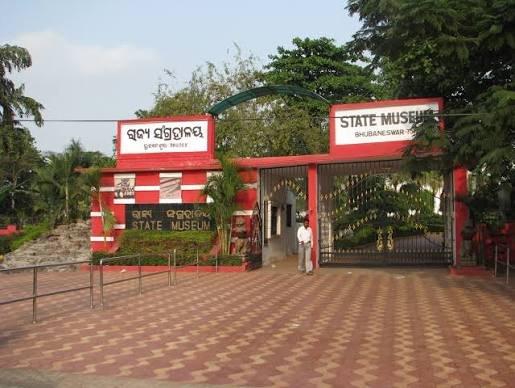
Quick Facts: Odisha State Museum
| Detail | Information |
| Established | 1932, by Prof. N.C. Banerjee and Prof. Ghanshyam Das |
| Original Location | Ravenshaw College, Cuttack |
| Shifted to Bhubaneswar | 1957/1960, under Dr. H.K. Mahtab’s initiative |
| Managed By | Department of Culture, Government of Odisha |
| Location | Near Kalpana Square, BJB Nagar, Lewis Road, Bhubaneswar, Odisha – 751014 |
| Building Structure | Four-storey complex around an interior courtyard |
| Number of Sections | 11 (some listings cite up to 27 sub-sections) |
| Opening Hours | 10:00 AM to 5:00/5:30 PM |
| Ticket Counter Hours | 10:00 AM to 4:30 PM |
| Weekly Off | Monday, plus government holidays |
| Entry Fee (Indian Adult) | ₹10–₹20 |
| Entry Fee (Indian Student) | ₹10 |
| Entry Fee (Foreign Visitor) | ₹100 |
| Total Palm Leaf Manuscripts | Approx. 37,000 |
| Distance from Bhubaneswar Railway Station | Approx. 1.5–2 km |
| Distance from Biju Patnaik International Airport | Approx. 3 km |
| Recommended Visit Duration | 1.5–2 hours |
From a College Archive to Odisha’s Premier Museum
The Odisha State Museum’s origins trace back to a modest college archive, started by historians N.C. Banerjee and Ghanshyam Das of Ravenshaw College in Cuttack, then the capital of Odisha. What began as a small collection of archaeological finds gathered within the college premises caught the government’s attention in 1938, when it was formally transformed into the Provincial Museum of Odisha. Nearly two decades later, under the initiative of then Chief Minister Dr. H.K. Mahtab, the museum was relocated to Bhubaneswar, eventually settling into its present four-storey building constructed around 1960.
Today, the museum is administered by the Government of Odisha’s Department of Culture, working in collaboration with the Archaeological Survey of India, and holds recognition for treasure trove purposes — meaning archaeological finds discovered across the state are often channelled into its collection.
What You’ll See Inside: 11 Thematic Sections
The museum’s collection is organised across a wide range of specialised sections, giving visitors a genuinely comprehensive view of Odisha’s cultural and natural history:
- Archaeology – Pre-historic antiquities and excavated artefacts from ancient and medieval Kalinga
- Epigraphy – Stone inscriptions and copper plates documenting historical records
- Numismatics – Coins spanning various historical periods
- Armoury – Weapons and armour, including the personal gun of Madhusudan Das
- Mining and Geology – Geological specimens and mineral collections
- Natural History – Stuffed animals and specimens documenting the region’s wildlife
- Art and Craft – Traditional Odishan craftsmanship and decorative arts
- Contemporary Art – Modern artistic works reflecting the state’s evolving culture
- Patta Painting – Traditional Pattachitra artwork native to Odisha
- Anthropology – Ethnological displays documenting Odisha’s indigenous tribal cultures
- Palm Leaf Manuscripts – The museum’s most celebrated section, home to roughly 37,000 manuscripts covering subjects like Ayurveda, Silpasastra, and the 12th-century Gita Govinda
Beyond these core galleries, the museum also maintains a research library and houses traditional musical instruments and textile collections, rounding out its role as a comprehensive cultural institution rather than a narrowly focused archaeological display.
Odisha State Museum Timings
The museum keeps a consistent six-day schedule:
- Open: Tuesday to Sunday, 10:00 AM to 5:00/5:30 PM
- Ticket counter hours: 10:00 AM to 4:30 PM
- Closed: Every Monday, along with government holidays
Since the ticket counter closes earlier than the museum itself, it’s best to plan your arrival at least an hour before the stated closing time to ensure entry.
Entry Fee and Ticket Price
Pricing remains genuinely modest across visitor categories:
- Indian adults: ₹10–₹20 per person
- Indian students: ₹10 per person
- Foreign visitors: ₹100 per person
- Camera/photography: Additional charge applies if permitted; confirm at the counter
- Payment: Tickets are sold directly at the museum counter
Given the depth and scale of the collection, particularly the palm leaf manuscript gallery, the entry fee represents excellent value even for a relatively brief visit.
Location and How to Reach
The museum sits in a central, well-connected part of Bhubaneswar.
- Address: Near Kalpana Square, BJB Nagar, Lewis Road, Bhubaneswar, Odisha 751014
- From Bhubaneswar Railway Station: Approximately 1.5–2 km
- From Biju Patnaik International Airport: Approximately 3 km, roughly an 8-minute drive via Janpath/Forest Park/Ekamra Road
- By road: Well served by prepaid taxis, auto-rickshaws, and the local Mo Bus service
Given its short distance from both the airport and railway station, the museum makes for an easy stop whether you’re beginning or ending your Bhubaneswar visit.
Tips for a Smoother Visit
- Arrive well before 4:30 PM, since the ticket counter closes ahead of the museum’s actual closing time
- Prioritise the palm leaf manuscript gallery if you’re short on time, as it’s the museum’s signature collection
- Check for government holiday closures in addition to the standard Monday closure
- Use Mo Bus or an auto-rickshaw for an economical way to reach the museum from central Bhubaneswar
- Set aside at least 1.5–2 hours given the scale of the 11-section collection
Frequently Asked Questions
Q1. Is the 12th-century Gita Govinda manuscript always on display, or does it rotate?
The Gita Govinda manuscript is one of the museum’s most celebrated permanent holdings within the palm leaf manuscript gallery, though specific display arrangements can occasionally change. It’s generally considered one of the highlights any visitor should look out for.
Q2. Why do ticket prices vary between ₹10 and ₹20 for Indian adults across different sources?
Reported entry fees have shown some variation over time, likely reflecting periodic revisions to the museum’s pricing structure. It’s best to confirm the exact current rate at the ticket counter when you arrive.
Q3. Is photography allowed inside the galleries?
Photography is generally permitted with an additional fee, though specific restrictions may apply to sensitive sections like the manuscript gallery. It’s worth checking with staff at the entrance before photographing any particular exhibit.
Q4. How does this museum compare to visiting Bhubaneswar’s ancient temples for understanding Odisha’s history?
The museum offers curated, contextualised artefacts and manuscripts under one roof, complementing rather than replacing a visit to the city’s temple ruins like Parsurameswar or Rajarani Temple. Many visitors find combining both gives a fuller picture of Odisha’s historical and living cultural traditions.