Eighty-one bronze statues from the Chola dynasty, excavated from an ancient trading site that once did business with the Roman Empire, sit inside a colonial-era building on St. Louis Street in Puducherry’s White Town. The Puducherry Museum, also known as the Pondy Museum, holds over 6,500 exhibits spanning from the 1st century BC through the French colonial period, telling the layered story of a city that served traders from Rome, the Cholas, and eventually the French. If a visit is on your Pondicherry itinerary, here’s a complete guide to the Puducherry Museum’s timings, ticket price, entry fee, and location.
Quick Facts: Puducherry Museum
| Detail | Information |
| Also Known As | Pondy Museum, Pondicherry Museum |
| Constructed | 1983 (as a museum) |
| Location | Near Bharathi Park/Rock Beach, White Town, Puducherry – 605001 |
| Opening Hours | 9:00/10:00 AM to 1:00 PM & 2:00 PM to 5:00/6:30 PM |
| Weekly Off | Monday, plus national holidays |
| Entry Fee (Indian Adult) | ₹10–₹15 |
| Entry Fee (Child) | ₹5 |
| Entry Fee (Foreign Visitor) | ₹50 |
| Total Exhibits | 6,500+ |
| Bronze Statues from Arikamedu | 81 (Chola period) |
| Historical Eras Covered | 1st century BC to French colonial period |
| Nearby Landmark | Romain Rolland Library |
| Recommended Visit Duration | 45 minutes to 1 hour |
A Small Museum Documenting a Big Story
Puducherry’s history isn’t a single narrative — it’s layered across centuries of maritime trade, dynastic rule, and European colonisation, and the Puducherry Museum condenses all of it into a compact, walkable space. Constructed in 1983, the museum was built specifically to house archaeological findings and cultural evidence gathered from the region, much of it excavated by the Archaeological Survey of India at the nearby Arikamedu site.
Arikamedu itself deserves special mention — located roughly 7 km from Puducherry, it functioned as an ancient trading centre with documented connections to the Roman Empire, making it one of South India’s most historically significant archaeological sites. Many of the museum’s most striking artefacts trace directly back to this location.
What You’ll See Inside
The museum organises its collection roughly into three historical periods, giving visitors a structured journey through Puducherry’s past:
- Early period (1st–4th century) – Artefacts reflecting the region’s role as an ancient maritime trading hub, including items connected to Roman trade
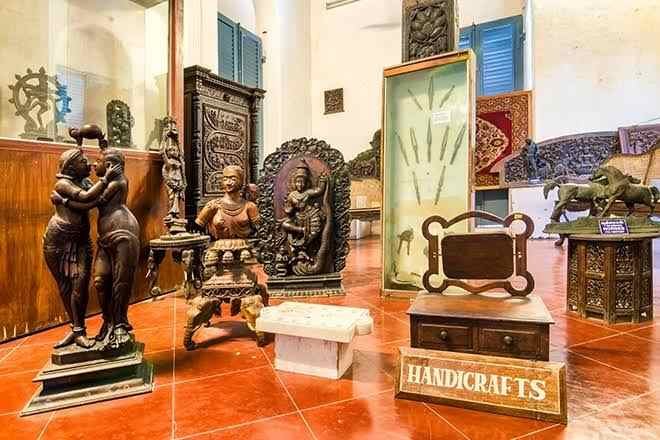
- Pallava and Chola era (3rd–10th century) – Featuring 81 bronze statues and stone sculptures excavated from Arikamedu
- European/French colonial era – French furniture, colonial-era objects, and artefacts reflecting Puducherry’s time under French rule
Beyond these core historical sections, the museum’s broader collection includes:
- Burial urns and terracotta figures
- Crockery, guns, swords, and spears from various periods
- Tanjore and glass paintings, alongside colonial prints and contemporary oils, pastels, and watercolours
- Bronze statues of gods and goddesses, temple lamps, and handicrafts
- A palanquin and pousse-pousse displayed on the ground floor
- A collection of snail shells gathered from beaches near Pondicherry
Given the sheer diversity packed into a relatively small building, many visitors find the museum surprisingly information-dense for its compact footprint.
Puducherry Museum Timings
The museum follows a split daily schedule with a midday break, and reported hours vary slightly across sources:
- Open: Tuesday to Sunday, roughly 9:00/10:00 AM to 1:00 PM and 2:00 PM to 5:00/6:30 PM
- Closed: Every Monday, along with national holidays
- Best time to visit: October to January, when Puducherry’s weather is at its most pleasant and coincides with the city’s main festival season
Since the museum closes for a lunch break between 1 PM and 2 PM, it’s worth planning your visit either in the morning slot or comfortably after 2 PM.
Entry Fee and Ticket Price
Ticket pricing remains genuinely modest, making this one of the most affordable heritage stops in Puducherry:
- Indian adults: ₹10–₹15 per person
- Children: ₹5 per person
- Foreign visitors: ₹50 per person
- Payment: Tickets are sold directly at the museum counter
Given the modest entry fee relative to the depth of the collection, the museum offers excellent value even for a relatively brief visit.
Location and How to Reach
The museum sits in White Town, Puducherry’s charming French Quarter, close to several other landmarks.
- Address: Near Bharathi Park/Rock Beach, White Town, Puducherry 605001
- Nearby landmark: Romain Rolland Library, situated close to the museum
- By road: Easily reachable by auto-rickshaw, taxi, or on foot if you’re already exploring White Town
- Nearby attractions: Basilica of the Sacred Heart of Jesus, French War Memorial, and Bharathi Park are all within walking distance
Given its central White Town location, the museum is easy to combine with a broader heritage walk through Puducherry’s French Quarter, including nearby colonial architecture and coastal promenades.
Tips for a Smoother Visit
- Plan your visit around the midday lunch break between 1 PM and 2 PM
- Visit between October and January for the most pleasant weather and to coincide with local festivals
- Combine your trip with nearby White Town landmarks like Romain Rolland Library and Bharathi Park
- Bring children along, since the compact size and engaging artefacts make it manageable for shorter attention spans
- Set aside about 45 minutes to an hour, since the museum, while dense with exhibits, is relatively compact
Frequently Asked Questions
Q1. Is the museum worth visiting if I only have limited time in Puducherry?
Yes, its compact size actually works in your favour — most visitors comfortably cover the entire museum in 45 minutes to an hour. It’s a good fit even for travellers with a tight Pondicherry itinerary.
Q2. What’s the connection between this museum and the Arikamedu archaeological site?
Many of the museum’s most significant artefacts, including 81 Chola-period bronze statues, were excavated from Arikamedu, an ancient trading centre about 7 km from Puducherry with documented Roman trade connections. Visiting the museum gives context to Arikamedu’s history without needing to travel to the site itself.
Q3. Is this museum suitable for a family visit with young children?
Yes, its small size and varied exhibits make it well-suited for children, since the visit doesn’t demand a long attention span while still offering plenty to see. It’s also a good option for a rainy day activity in Puducherry.
Q4. Are there different closing times listed across sources, and which should I trust?
Reported hours vary slightly, with some sources listing a 5 PM closing and others citing 6:30 PM, likely reflecting updates over time. It’s best to confirm the exact current timing locally or with your accommodation before planning your visit.