The Partition Museum Amritsar occupies the same Town Hall building that once served as a refugee camp during one of history’s largest human migrations, when nearly 18 million people crossed borders following India’s 1947 partition. Opened on 17th August 2017 — deliberately chosen as Partition Remembrance Day, the anniversary of when the actual India-Pakistan boundary was announced — this is the world’s first museum dedicated entirely to the human stories of that event, built by the Arts and Cultural Heritage Trust with support from the Punjab Government. If a visit is on your Amritsar itinerary, here’s a complete guide to the Partition Museum’s timings, ticket price, entry fee, and location.
Quick Facts: The Partition Museum Amritsar
| Detail | Information |
| Full Name | The Partition Museum |
| Distinction | World’s first museum dedicated to the 1947 Partition |
| Inaugurated | 17 August 2017 |
| Built By | The Arts and Cultural Heritage Trust (TAACHT) |
| Building | Historic Town Hall, constructed 1870 by architect John Gordon |
| Location | Hall Road, Town Hall, Katra Ahluwalia, Amritsar, Punjab – 143006 |
| Opening Hours | 10:00 AM to 6:00 PM |
| Weekly Off | Monday, plus public holidays |
| Entry Fee (Current, per latest listing) | ₹250 (flat rate) |
| Entry Fee (Older listings) | ₹10 Indians / ₹250 foreigners |
| Free Entry | Children below 5 years, Partition survivors |
| Recorded Interviews on Display | 100+ oral histories |
| Distance from Golden Temple | Approx. 1 km |
| Distance from Amritsar Junction | Approx. 2 km |
| Recommended Visit Duration | 1–2 hours |
A Building That Witnessed History Twice
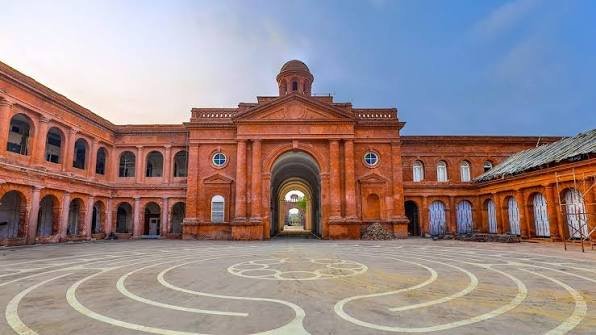
The Town Hall housing this museum isn’t just an administrative choice — it’s genuinely tied to the history it now documents. Built in 1870 by architect John Gordon, the building once housed the court of small causes, city police headquarters, municipal offices, a free library, and a meeting room. It suffered severe damage during the Punjab uprising of 1919, was rebuilt, and then witnessed violence again during the chaos of 1947, when it reportedly served as a refugee camp for those displaced by Partition.
Today, the building’s architectural character has been carefully preserved rather than modernised. Original wooden floors, staircases, electrical wiring, switches, and ceiling fans have all been retained, giving visitors a genuine sense of walking through the same physical space that bore witness to the events the museum documents.
What You’ll See Inside
Described as a “People’s Museum,” the collection is built almost entirely from crowdsourced memories, personal donations, and oral histories rather than official government archives:
- Over 100 recorded oral history interviews, playing continuously across the galleries
- Refugee artefacts and personal belongings donated by survivors and their families
- Letters, photographs, and original documents connected to the post-partition riots and migration
- Newspaper clippings from the period, documenting how the events unfolded in real time
- Maps and installations illustrating the scale and route of the mass migration
- Multimedia exhibits combining audio testimony with visual displays for a more immersive experience
Because so much of the collection is first-person testimony rather than curated artefacts alone, many visitors describe the experience as emotionally intense rather than a typical historical walkthrough — this is a museum that asks you to slow down and genuinely listen.
The Partition Museum Timings
The museum follows a consistent weekly schedule:
- Open: Tuesday to Sunday, 10:00 AM to 6:00 PM
- Closed: Every Monday, plus select public holidays
- Best time to visit: October to March, both for pleasant weather and to coincide with the completed Heritage Street walk from the Golden Temple
Given the emotional depth of the exhibits, many visitors prefer visiting earlier in the day for a quieter, more reflective experience rather than during busier midday hours.
Entry Fee and Ticket Price
Pricing has shown some variation across sources and time periods, so it’s worth understanding both the recent and older figures:
- Recent listings (2026): A flat entry fee of ₹250 for all visitors
- Earlier reported pricing: ₹10 for Indian citizens and ₹250 for foreign nationals, with some sources citing ₹5–₹20 for students, senior citizens, and children
- Free entry: Children aged 5 and below, and Partition survivors
- Guided tours and audio guides: Available for an additional fee
- Lift access: Available to upper floors, operated by staff, primarily reserved for elderly visitors and persons with disabilities
Given the inconsistency in reported current pricing, it’s genuinely worth checking the museum’s current rate directly before your visit, since it appears the fee structure has been revised from the original tiered system to a flatter rate.
Location and How to Reach
The museum sits at the heart of Amritsar’s Heritage Street, connecting two of the city’s most significant landmarks.
- Address: Hall Road, Town Hall, Katra Ahluwalia, Amritsar, Punjab 143006
- From Golden Temple: Approximately 1 km, roughly a 10-minute walk via Heritage Street, passing Saragarhi Sarai and Gurdwara Santokhsar Sahib
- From Amritsar Junction Railway Station: Approximately 2 km
- From Sri Guru Ram Das Jee International Airport: Approximately 11–14 km
- By road: Well served by autos, cabs, and cycle rickshaws throughout central Amritsar
Given its location right at the end of Heritage Street, most visitors naturally combine a Partition Museum visit with a walk from the Golden Temple, taking in several other heritage stops along the way.
Tips for a Smoother Visit
- Combine your visit with a walk along Heritage Street starting from the Golden Temple
- Visit earlier in the day for a quieter, more reflective experience given the emotional nature of the exhibits
- Confirm the current entry fee before visiting, since pricing has been reported inconsistently across sources
- Consider a guided tour for deeper context on the oral histories and artefacts
- Pair your trip with nearby Jallianwala Bagh, roughly 2 km away, for a fuller understanding of this period in Amritsar’s history
Frequently Asked Questions
Q1. Is this museum emotionally intense, and is it suitable for children?
Yes, the museum deals directly with the trauma of mass displacement and violence, and many visitors find it genuinely heavy rather than a casual walkthrough. It can still be meaningful for older children with some guidance, but it’s worth preparing younger visitors for the subject matter beforehand.
Q2. Why do entry fee figures vary so much across different sources?
Older listings cite a tiered ₹10 (Indian) and ₹250 (foreign) structure, while more recent sources mention a flat ₹250 rate for all visitors. It’s best to confirm the current fee directly with the museum before your visit, since pricing appears to have changed.
Q3. Can I combine this visit with other Amritsar heritage sites in the same day?
Yes, its location at the end of Heritage Street makes it easy to combine with the Golden Temple, Jallianwala Bagh, and other nearby landmarks. Most visitors build it into a broader half-day heritage walk through central Amritsar.
Q4. Are guided tours worth taking, or is the museum easy to navigate independently?
Given the depth of oral histories and personal artefacts, many visitors find guided tours add valuable context that’s easy to miss when exploring independently. If you want a deeper understanding of individual stories behind the exhibits, it’s worth the additional cost.