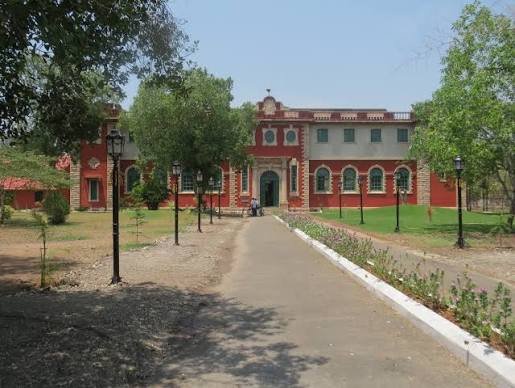
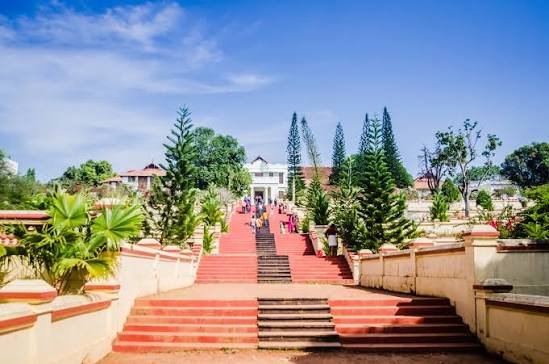
Inside a 17th-century Nayak-era palace in Madurai lies a fragment of bloodstained cloth Mahatma Gandhi wore on the day he was assassinated — one of the most striking artefacts at the Gandhi Memorial Museum, a site the United Nations has recognised among its Peace Museums Worldwide. Established in 1959, this is one of only five Gandhi museums in India, and it holds particular significance because Madurai itself played a defining role in Gandhi’s fight against untouchability, most notably when he entered the city’s Meenakshi Temple alongside Harijans. If a visit is on your Madurai itinerary, here’s a complete guide to the Gandhi Museum’s timings, ticket price, entry fee, and location.
Quick Facts: Gandhi Museum Madurai
| Detail | Information |
| Also Known As | Gandhi Smarak Sangrahalaya, Gandhi Memorial Museum |
| Established | 1959 |
| Governing Body | Gandhi Smarak Nidhi |
| Building History | Former palace of Rani Mangammal (Naick dynasty), built c. 1670 AD, also called Tamukkam Palace |
| Recognition | Listed among UNO’s Peace Museums Worldwide |
| Location | Collector Office Road, Tallakulam/Alwarpuram, Madurai, Tamil Nadu – 625020 |
| Opening Hours | 10:00 AM to 1:00 PM & 2:00 PM to 5:30/5:45 PM |
| Weekly Off | Friday |
| Entry Fee | Free |
| Camera Fee | ₹50 |
| Photographs on Display | 124 rare photographs of Gandhi’s personal life |
| Total Relics/Artefacts | Approx. 100, including 14 original items used by Gandhi |
| Distance from Madurai Junction | Approx. 4 km |
| Recommended Visit Duration | 1–1.5 hours |
A Palace That Witnessed Centuries of Changing Rule
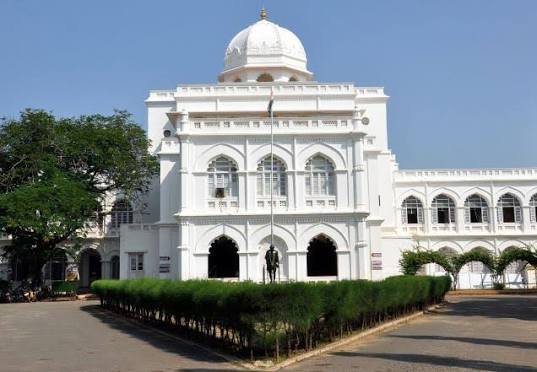
What makes the Gandhi Museum in Madurai architecturally distinct from other Gandhi memorials is the building itself — it was originally the palace of Rani Mangammal of the Naick dynasty, constructed around 1670 AD and known as Tamukkam Palace. Over the following centuries, the palace passed through the hands of various rulers, including the East India Company, before eventually being repurposed to house this memorial in 1959.
The museum was one of four established nationwide following a 1949 decision by the Gandhi Smarak Nidhi, which set up memorial museums in New Delhi, Sevagram, Sabarmati, and Madurai to preserve records and relics connected to Gandhi’s life and legacy. Madurai’s inclusion wasn’t incidental — the city holds genuine historical weight in Gandhi’s own story, particularly his 1946 entry into the Meenakshi Sundareswara Temple alongside Harijans, a defining moment in his campaign against untouchability.
What You’ll See Inside
The museum’s collection blends personal artefacts, historical documents, and curated exhibitions tracing both Gandhi’s life and India’s broader freedom struggle:
- A bloodstained cloth – Worn by Gandhi on the day of his assassination
- 124 rare photographs – Documenting Gandhi’s life from childhood through to his final journey to the crematorium
- 14 original artefacts – Personal items actually used by Gandhi
- Original letters – Including correspondence to Narayanan Satsangi of Devakottai, and notably, a letter Gandhi wrote to Adolf Hitler
- A congratulatory message – Sent by Gandhi to freedom fighter and poet Subramania Bharati
- “India Fights for Freedom” exhibition – Featuring 265 illustrations tracing the history of India’s independence movement
- “Visual Biography of Bapuji” – A comprehensive collection of photos, paintings, sculptures, manuscripts, and selected letters
- Reference library – Housing books by and about Gandhi in various Indian and foreign languages, along with Photostat copies of his letters and petitions
Beyond the historical exhibits, the museum also runs regular educational activities, including self-employment classes, Hindi and Sanskrit courses, and yoga and meditation sessions, reflecting its role as more than just a static display space.
Gandhi Museum Timings
The museum follows a split daily schedule with a midday break:
- Open: Saturday to Thursday, 10:00 AM to 1:00 PM and 2:00 PM to 5:30/5:45 PM
- Closed: Every Friday
- Best visiting window: Afternoon slots between 2:00 PM and 4:45 PM tend to work well for a relaxed visit
Since the museum closes for a midday break between 1 PM and 2 PM, it’s worth planning your arrival either well before or comfortably after this window.
Entry Fee
The Gandhi Museum remains free to visit, in keeping with its role as a national memorial:
- General entry: Free for all visitors
- Camera fee: ₹50, if you plan to take photographs inside
Given the absence of an entry fee, this remains one of the most accessible cultural and historical sites in Madurai, regardless of visitor budget.
Location and How to Reach
The museum sits centrally in Madurai, within reasonable distance of the city’s main transport hubs.
- Address: Collector Office Road, Tallakulam/Alwarpuram, Madurai, Tamil Nadu 625020
- From Madurai Junction Railway Station: Approximately 4 km
- From Madurai Bus Stand: Approximately 3.3 km
- By road: Well connected by auto-rickshaws and taxis from across the city
Given its central location, the museum is easy to combine with other Madurai landmarks, particularly the Meenakshi Temple, given its direct historical connection to Gandhi’s visit.
Tips for a Smoother Visit
- Plan your visit around the 1:00–2:00 PM lunch closure to avoid arriving during the break
- Visit in the afternoon between 2:00 PM and 4:45 PM for a more relaxed pace
- Budget ₹50 separately if you plan to photograph the exhibits
- Combine your trip with Meenakshi Temple, given its direct connection to Gandhi’s history in Madurai
- Avoid planning a Friday visit, since the museum remains closed that day
Frequently Asked Questions
Q1. Why does the museum close on Fridays instead of the more common Monday closure seen at other Indian museums?
The Friday closure is specific to this museum’s operating schedule under the Gandhi Smarak Nidhi, differing from the Monday-closure pattern common at many other Indian heritage sites. It’s worth checking this specifically if you’re planning a Friday visit to Madurai.
Q2. Is the letter Gandhi wrote to Hitler genuinely on display, or is it a replica?
The museum displays this letter as part of its historical document collection alongside other original correspondence, making it one of the more historically significant items in the exhibit. It’s considered one of the museum’s notable pieces for visitors interested in Gandhi’s global outreach efforts.
Q3. How does this museum connect specifically to Madurai’s own history, beyond being a general Gandhi memorial?
Madurai holds particular significance because Gandhi entered the city’s Meenakshi Temple alongside Harijans in 1946, a landmark moment in his campaign against untouchability. This local connection is part of why Madurai was chosen as one of the four original Gandhi Smarak Sangrahalaya locations nationwide.
Q4. Are the educational classes held at the museum open to tourists, or only local residents?
The self-employment, language, and yoga classes are primarily geared toward local community engagement rather than tourist participation. Visitors are welcome to observe the museum’s cultural activities, but these programmes are generally structured for residents rather than short-term travellers.